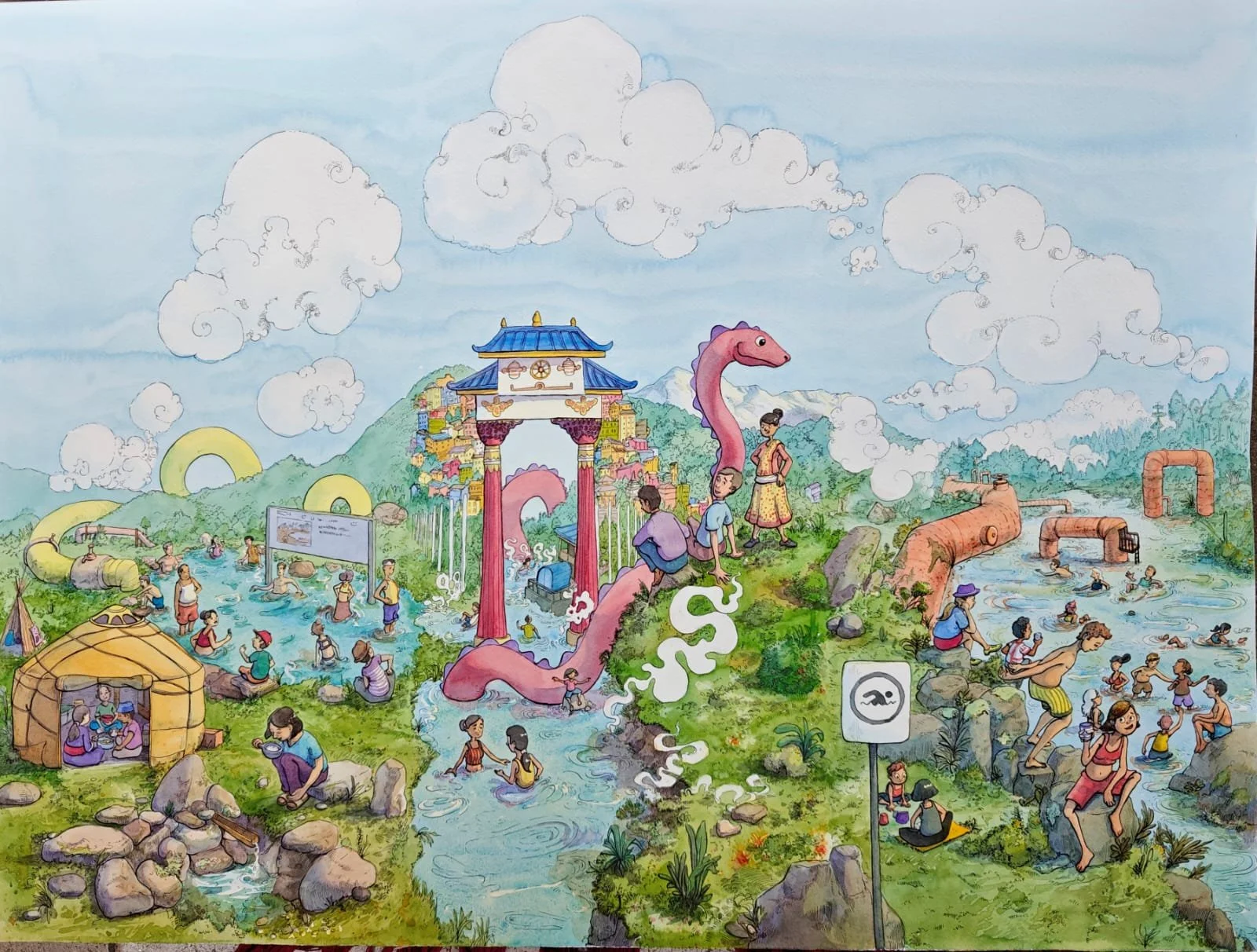
Accessing the Wellbeing Commons: therapeutic resource-ification of natural and historic environments and social exclusion in the UK and Inner Asia
In many parts of the world, rivers, lakes, hot and mineral springs and seas are valued for their healing or therapeutic qualities. Seen as shared natural resources, these places can improve people’s physical and mental wellbeing.
This project explores how people access these watery places that they consider restorative of health and wellbeing. The project focuses on three locations: Sikkim in northeast India, Mongolia, and Devon in the United Kingdom.
Our project asks: who is able to use these places, and who is not? As interest in utilising these places – in tourism and medicine – becomes more widespread, natural water sites come to be managed or commercialised in new ways. While these changes can create opportunities for more people to visit, they can also make access more difficult for some people and disrupt the ways these waters had previously been used.
During the project, we intend to learn from people about how waters across our fieldsites are being used, managed and understood. These different perspectives and experiences will be at the forefront of our work, and drawn out during conversations, interviews and archival research. By comparing experiences across these three regions, our project explores how economic and legal decisions about land use shape how these spaces are understood in wellbeing terms, and who benefits from them.